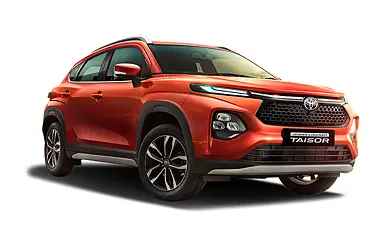
One of the most admired and esteemed automakers in the world is Toyota, a name that has practically come to represent dependability, creativity, and affordability. Since its founding in 1937 in Japan, Toyota has established a stellar reputation for engineering prowess, customer-focused design, and a dedication to quality that few other manufacturers can match. Toyota vehicles are trusted by millions of people in India and around the world, and they are more than simply machines. Toyota provides something for everyone, whether it’s for a family commute, rough terrain, luxury travel, or environmentally friendly driving.
Even though Toyota entered the Indian market later than some other international brands, it had a significant impact right away. In the late 1990s, Toyota Kirloskar Motor established operations and progressively unveiled models tailored to the Indian market in collaboration with the Kirloskar Group. Early automobiles such as the Qualis, which debuted in 2000, soon gained widespread recognition. Toyota’s early models, which were renowned for their dependability and simplicity of maintenance, established the standard for what Indian customers might anticipate from the brand: robust performance, minimal maintenance, and exceptional resale value.
Toyota’s product line in India grew considerably over time. In their individual markets, models such as the Corolla Altis, Fortuner, and Innova established a niche. In particular, the Innova revolutionized the MPV market. It swiftly rose to the top of the market for both families and business owners thanks to its unparalleled comfort, dependability, and usefulness. The powerful SUV, the Fortuner, became a status symbol and a favorite among people who desired dependability, power, and road presence. Professionals and city dwellers who valued comfort and brand trust were also big fans of Toyota’s sedan models, such as the Corolla.
Toyota’s engineering philosophy, which is based on the Japanese idea of continual improvement known as “Kaizen,” is one of the factors contributing to its success. Every vehicle that leaves a Toyota factory is put through a rigorous testing and quality assurance process. The company attempts to surpass expectations rather than merely meet them. The construction quality of Toyota vehicles reflects this idea. Toyota automobiles, whether they are luxury SUVs or low-cost hatchbacks, are renowned for their ability to age gracefully in terms of both appearance and functionality. What really distinguishes the brand are the fit and finish, component longevity, and reliability in providing exceptional ride quality.
Toyota’s unrivaled emphasis on safety is another key component of its success. Airbags, ABS, and impact-absorbing body structures were all technologies that Toyota had started incorporating long before many of its rivals did. A number of airbags, electronic stability control, advanced driver assistance systems (ADAS), and other smart safety technology have been added to models such as the Innova Hycross and the Urban Cruiser Hyryder in recent years. When paired with Toyota’s proven engineering, this emphasis on occupant safety gives drivers a sense of assurance that is difficult to quantify.
Toyota’s global goal has also placed a strong emphasis on innovation and sustainability. When the Prius was introduced in 1997, the business was a pioneer in hybrid technology. As the globe shifted to cleaner and more efficient vehicles, hybrid technology steadily gained traction, despite its initial delayed adoption. Strong hybrid versions like the Innova Hycross and Urban Cruiser Hyryder are now available from Toyota in India, providing consumers with the advantages of range anxiety-free fuel economy. The quickness of an electric motor and the dependability of a gasoline engine are combined in Toyota’s hybrids to provide a smooth driving experience.
The brand’s dedication to environmental conservation extends beyond hybrid technology. Solid-state batteries, hydrogen fuel cell cars, and even solar-powered mobility concepts are some of the next-generation mobility options that Toyota is actively developing. Even while India may still be a ways off from implementing these widely, as infrastructure and regulations change, Toyota’s innovations from around the world will eventually help the Indian market as well.
Recent Toyota vehicles have also placed a strong emphasis on design. Toyota, which was once renowned for prioritizing functionality over style, has improved its design in the past ten years. Modern Toyota vehicles are as aesthetically pleasing as they are mechanically sound, as evidenced by the Fortuner’s aggressive appearance, the Camry’s crisp lines, and the Glanza’s urban refinement. Additionally, interiors have greatly improved; Toyota cabins are now more engaging and user-friendly thanks to digital displays, soft materials, and feature-rich infotainment systems.
Toyota is also aware of how varied the Indian auto industry is. The business has wisely entered into collaborations and platform-sharing endeavors in order to meet a wide spectrum of client demands. The partnership between Toyota and Maruti Suzuki is a prime illustration of this. Although they are based on Maruti platforms, models like as the Glanza and Urban Cruiser are branded with Toyota’s service standards and warranty coverage. Toyota is able to reach the entry-level and mid-range markets with this approach without having to drastically increase development time or production costs.
Customer satisfaction is greatly influenced by Toyota’s after-sales service in addition to the vehicles themselves. The company has established a robust and extensive nationwide network of service centers. These establishments are renowned for their openness, knowledgeable technicians, authentic parts availability, and timely service. Toyota has a systematic, data-driven approach to customer care, which reduces downtime and fosters enduring trust. Because of the way their maintenance plans and service packages are designed to lower the overall cost of ownership, Toyota vehicles frequently have the highest resale value in their respective markets.
Not to be overlooked is Toyota’s commercial vehicle division. A pickup vehicle known for its legendary toughness, the Hilux, just entered the Indian market. The Hilux, which is well-known throughout the world for its unbeatable performance, is used by both enterprises and adventurers looking for a trustworthy partner in harsh environments. This car strengthens Toyota’s reputation as a manufacturer of long-lasting automobiles that can withstand harsh conditions and heavy use.
By volume, Toyota is still among the biggest automakers in the world. It maintains its position at the forefront of automotive production thanks to its manufacturing facilities in Southeast Asia, Europe, Japan, the United States, and now India. Toyota has established standards for others to follow and upheld a reputation for keeping its word thanks to its millions of vehicles sold annually and steady top ranks in dependability and customer satisfaction indices.
As Toyota looks to the future, connected mobility, electric powertrains, autonomous driving technology, and sustainability will become more and more important. The “Toyota Mobility Foundation” of the firm is tackling urban transportation issues with the goal of improving future mobility’s efficiency and inclusivity. Toyota is already spending billions to make the future a reality, while many other manufacturers are just starting to look at it.
Toyota provides Indian customers with comfort of mind. Toyota offers something for everyone, whether you’re a business owner seeking a reliable workhorse, a young family purchasing their first vehicle, or a large joint family searching for a practical people-mover. Few vehicles can match their reliable performance, long-term durability, and brand confidence, even though their cars aren’t usually the newest or most expensive.
Toyota fits nicely in in a nation where value for money is more important than brand snobbery, road conditions are unpredictable, and consumer wants are varied. It is more than just an automobile manufacturer; it is a business that is aware of local quirks, human needs, and the worldwide obligation of sustainable engineering.
In conclusion, Toyota automobiles are more than just automobiles. They are the epitome of careful invention, engineering integrity, and a dedication to enhancing lives via mobility. With a Toyota, you’re always in good hands whether you’re navigating difficult terrain, cruising on highways, or driving through a busy city. The brand’s foundation—trust, quality, and innovation that benefits generations—remains constant even as it changes with the times.